← Wines Sleight of Hand Cellars
Sleight of Hand Cellars

The Vineyards

Every wine is a cover of great source material. The vineyards are the songwriters.

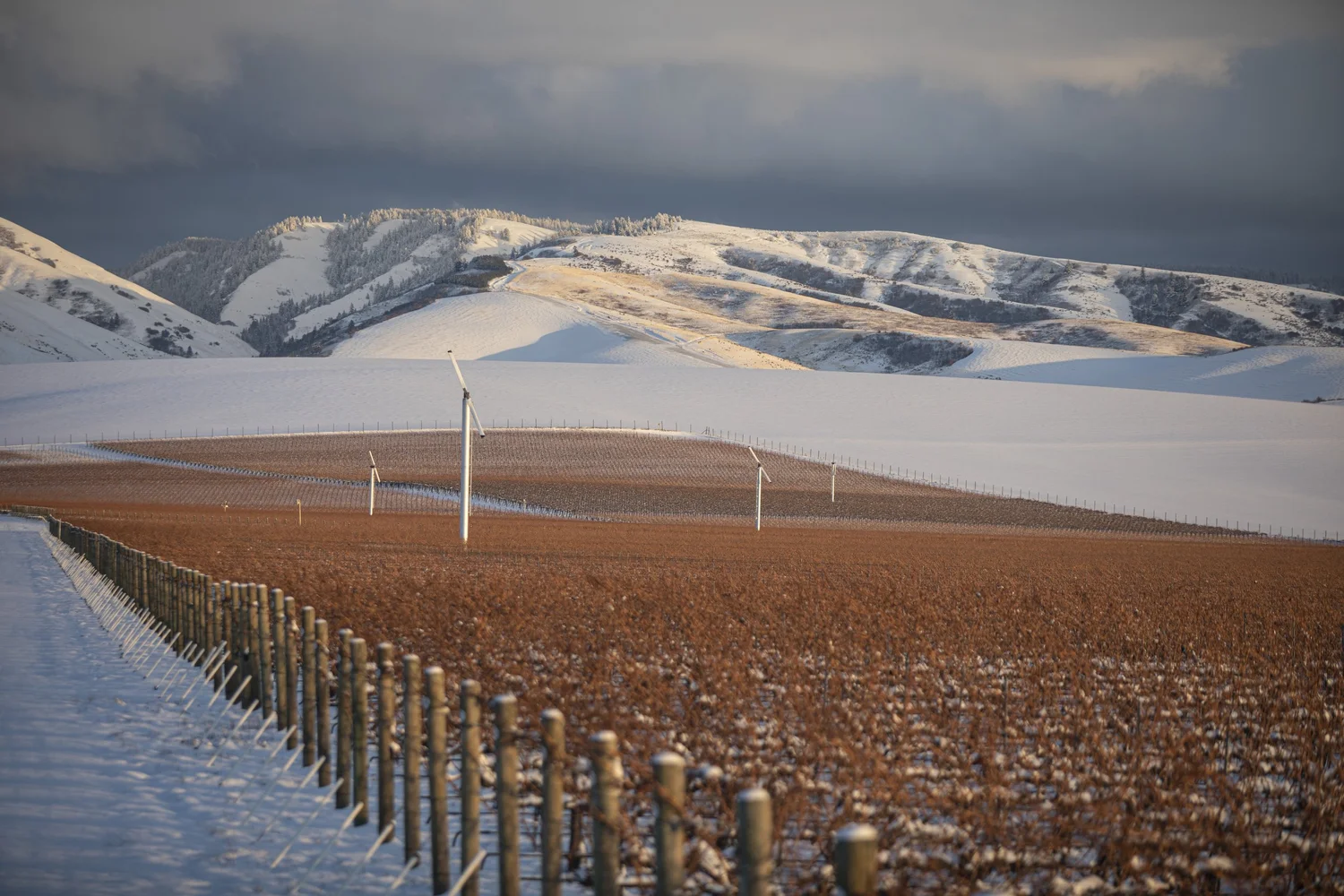
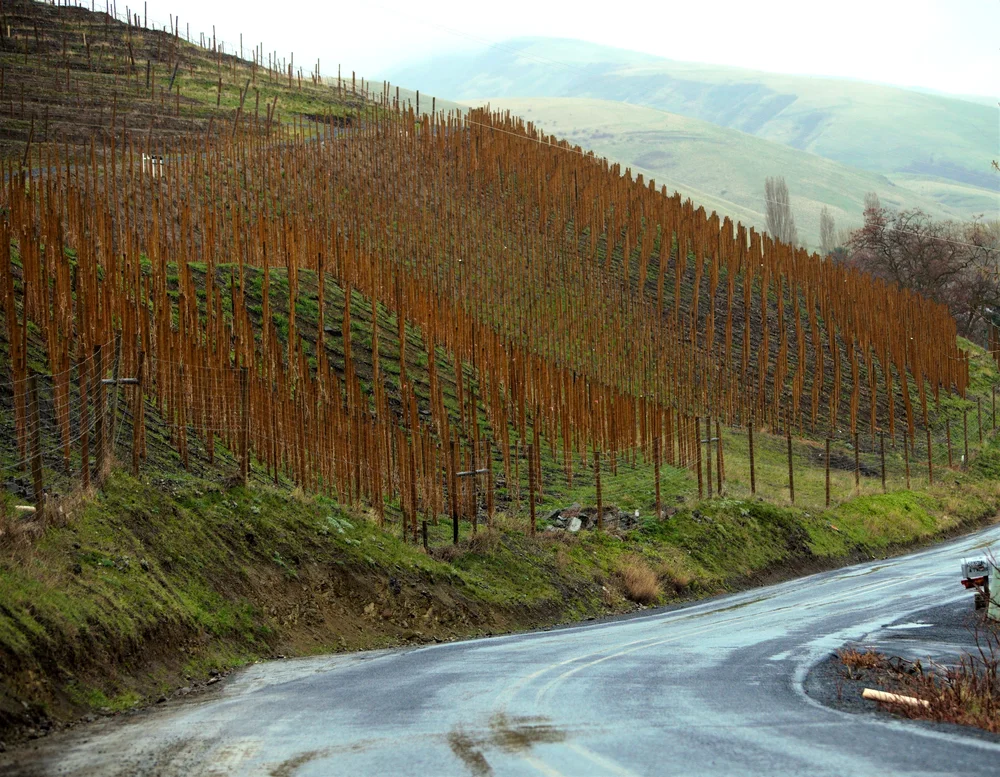
Walla Walla Valley

01

Blue Mountain Vineyard · The Binaural Block

Walla Walla Valley AVA · Estate block · Est. 2000, Binaural planted 2014

Blue Mountain vineyard
Elevation
1,200 ft, in the foothills on the eastern side of the valley.
Soil
Very deep, well-drained wind-blown loess and silty loam.
What we take
Cabernet Sauvignon, Cabernet Franc, and Petit Verdot from the original plantings (just under 40 acres); the 8-acre estate Binaural Block (Merlot, Cabernet Franc, Cabernet Sauvignon) planted in 2014.

The Site

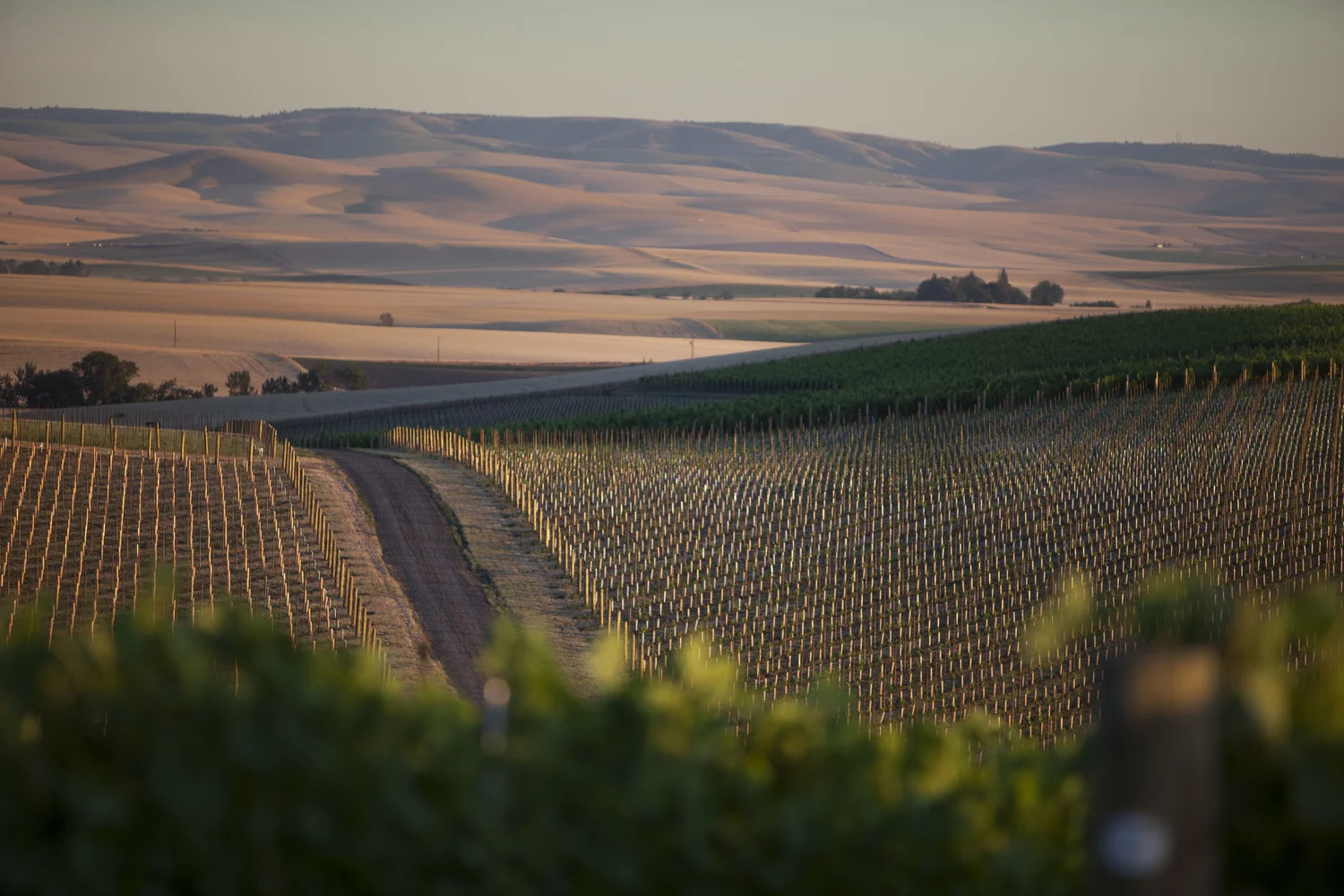
Blue Mountain was established in 2000 in the foothills of the Blue Mountains on the cool eastern edge of the Walla Walla Valley. In 2014 the winery planted its own 8-acre estate block here and named it the Binaural Block, after the Pearl Jam album; it has become the backbone of The Archimage.

The loess underfoot was carried in on the wind over thousands of years, one fine dust storm at a time, and it runs deep, letting roots range far for water and nutrients.

Terroir · Moderating Influences

One of the cooler sites in the valley and consistently one of our last picks in Walla Walla. It sees 14 to 16 inches of rain a year, generous by eastern Washington standards, and the deep, well-drained soil holds the vines in steady, unhurried ripening.

The moderating force here is elevation and cool air drainage off the Blues rather than a river: long hang time preserves acidity and aromatics while flavors build slowly. Groundcover is maintained by a flock of Old English Southdown 'Babydoll' sheep, which graze between the rows and feed the soil as they go.

In the Glass

Extended hang time gives intense flavors true to varietal: elegance, lift, and length rather than raw power. Blue Mountain is why the flagship blends read polished and long instead of merely big.

Talking point An estate block named for a Pearl Jam record, on wind-blown soil mowed by Babydoll sheep. Cool site, last pick, flagship fruit.

02

Les Collines Vineyard · Blocks 23 & 50

Walla Walla Valley AVA · Sourced since 2007 · Est. 2001

Les Collines vineyard
Elevation
1,140 to 1,370 ft across the vineyard; our blocks sit at roughly 1,215 to 1,280 ft.
Soil
Very deep wind-blown loess over basalt cobble gravels on Columbia River Basalt bedrock.
What we take
Two Syrah blocks, always picked separately: Block 23 (lower, deep loess, VSP trellis, naturally tiny crop) and Block 50 (higher, minimally pruned sprawl canopy, used 100% whole cluster).

The Site

The Foothills sits on the eastern slopes of the Walla Walla Valley at the base of the Blue Mountains, one of the prettiest sites in the valley. Established in 2001, its 212 planted acres make it the largest contiguous vineyard in the Walla Walla Valley, growing 19 varieties for more than 50 wineries; we have worked with its Syrah since 2007. It is LIVE certified, Salmon-Safe, and was Seattle Magazine's 2015 Washington Vineyard of the Year.

Block 50's modified, minimally pruned sprawl canopy is nearly unique in Walla Walla: the vines are left high and wild, the canopy shading the clusters. In certain vintages that block becomes Off He Goes, bottled in memory of Trey's mentor, Eric Dunham.

Terroir · Moderating Influences

Elevation and the cooler, wetter eastern-slope position slow ripening and hold acidity. Rain lifting off the Blues delivers roughly 19 to 22 inches a year, enough that the site could be dry-farmed; irrigation is minimal. The gently sloped hillside drains cold air in three directions, protecting against spring and fall frost. The deep, loose loess keeps yields naturally low; Block 23 typically sets a tiny crop on its own.

The two farming styles are the story: tidy trellised rows below, near-wild sprawl above. The sprawl canopy shades fruit through the heat of the day, an old-school moderating trick that trades sun exposure for savor.

In the Glass

Savory, structured Syrah with darker, more brooding fruit off the high sprawl blocks. Heavy whole-cluster use layers in stems, spice, and grip.

Talking point One vineyard, two personalities: a manicured block and a nearly hands-off one, farmed the way the vines want to grow.

03

Ziggy Stardust Block · Elevation Vineyard

Walla Walla Valley · North Fork microclimate · Estate block · First crop 2016

Elevation (Ziggy Stardust) vineyard
Elevation
About 1,450 ft, up the North Fork of the Walla Walla River.
Soil
Pure, fractured basalt; vines and posts had to be jackhammered into the rock to be established.
What we take
100% Syrah, planted at meter-by-meter spacing: roughly 4,200 vines on a single acre, on an extremely steep, rocky slope approaching 45 degrees.

The Site

Our newest estate block sits up the North Fork of the Walla Walla River in a true microclimate that behaves nothing like the rest of the valley: more rain, extreme heat spikes, yet moderated highs and lows overall, with more frost-free days than the valley proper.

This is about as extreme a planting as Washington has. The pitch approaches 45 degrees, the spacing is a European-density meter by meter, and every vine and post was jackhammered into solid fractured lava rock.

Terroir · Moderating Influences

The North Fork canyon is the moderating engine: river-canyon air movement smooths out temperature extremes and extends the frost-free window even while the site catches more rain and more heat than the valley average.

Bare fractured basalt and brutal vine density force the plants to compete; tiny per-vine yields and deep root struggle concentrate everything.

In the Glass

An intense, floral, savory Syrah unlike anywhere else in the valley, the kind of wine only stress and stone can make.

Talking point Roughly 4,200 vines jackhammered into a 45-degree wall of lava rock, named for Bowie. The wine is Spiders From Mars; the vineyard earns the name.

The Rocks District of Milton-Freewater

04

Stoney Vine Vineyard

Rocks District of Milton-Freewater AVA · Estate vineyard · Est. 2007 · 18.5 acres

Stoney Vine vineyard
Elevation
870 ft, on a nearly flat reach of the ancient alluvial fan.
Soil
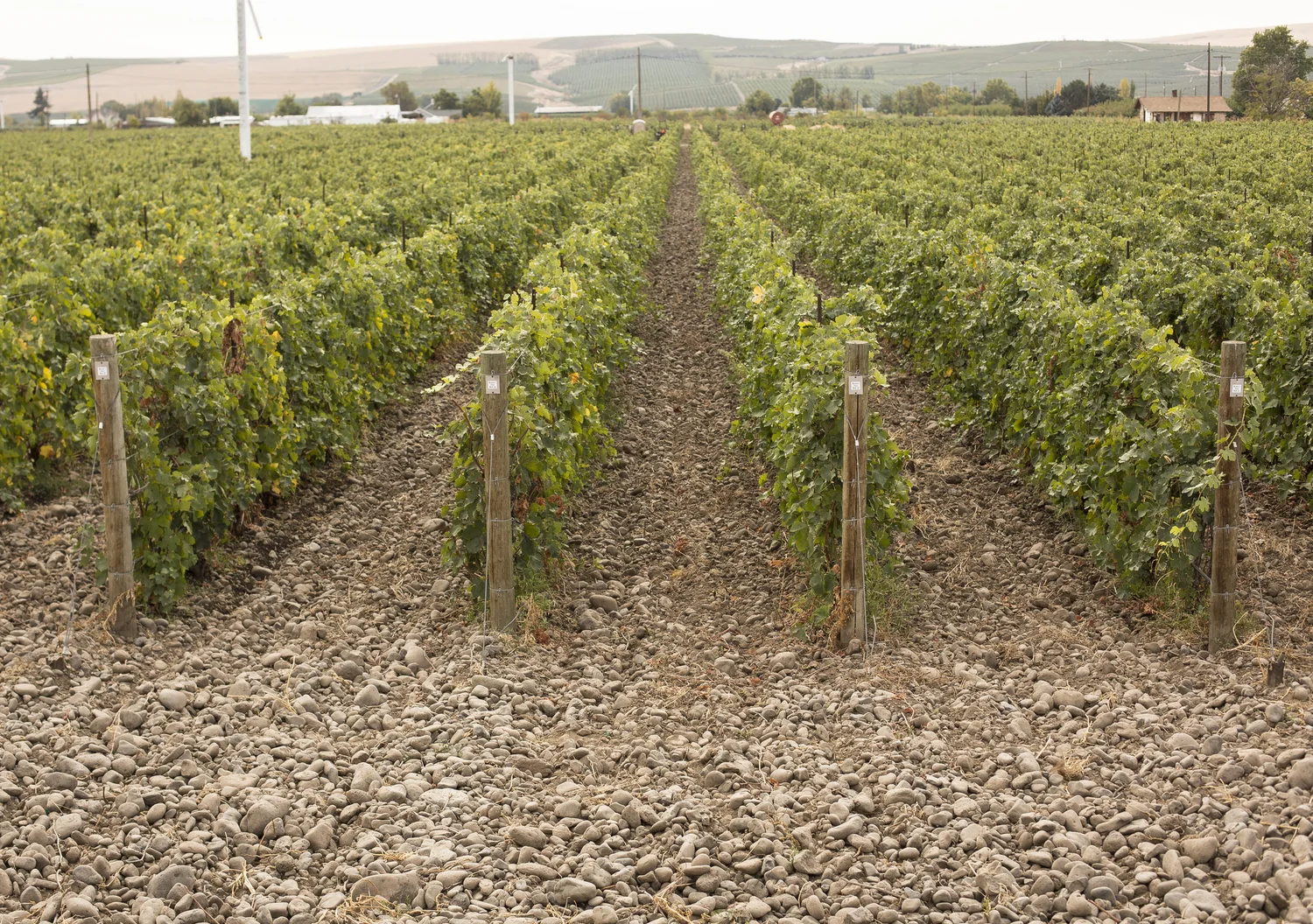
Freewater very cobbly loam: softball-sized basalt cobbles washed down out of the Blue Mountains, deposited 100 to 300 ft deep in places.
What we take
Our estate planting: 18.5 acres of Syrah across 3 clones, at 7×4 spacing, 1,555 vines per acre, farmed sustainably across goblet, VSP, and fan trellising.

The Site

Stoney Vine grows in the ancient bed of the Walla Walla River, on the Oregon side of the valley. As the river shifted over thousands of years it left basalt cobbles piled 100 to 300 ft deep. Settlers grew tree fruit here from the 1800s; the first commercial grape plantings arrived in the late 1990s, and it is now some of the most coveted ground in Walla Walla.

The Rocks District is the only AVA in the United States whose boundaries are defined by a single landform and a single soil series; about 96% of it is covered by Freewater series cobbles found almost nowhere else in the valley. Established in 2007, Stoney Vine provides estate fruit for both Sleight of Hand and Dusted Valley.

Terroir · Moderating Influences

The stones do everything. Dark basalt cobbles absorb solar radiation all day and radiate it back at night, warming soil and fruit, pushing ripening, and cutting frost risk in spring and fall.

Drainage is nearly instant, so roots dive 30 ft or more chasing water, pulling savory minerality up with them. The cobbles resist erosion, discourage rot and mildew, and carry high calcium, titanium, and iron.

In the Glass

The unmistakable Rocks signature: savory, gamey wines with olives, iodine, wet stone, minerality, and plums. That wet-stone note is not poetry; it is the cobblestones talking.

Talking point Our estate piece of the only AVA in America drawn around a single soil. Châteauneuf-du-Pape galets, Walla Walla riverbed.

05

Funk Vineyard

Rocks District of Milton-Freewater AVA · Sourced · Syrah planted 2007

Elevation
965 ft, near the apex of the alluvial fan: the warmer end of the Rocks District.
Soil
Wall-to-wall softball-sized basalt cobbles of the ancient Walla Walla riverbed.
What we take
Syrah (Phelps clone) from five acres planted in 2007 by Richard and Anita Funk, trained on a Geneva Double Curtain trellis. LIVE Certified and Certified Salmon Safe.
Wines
Funkadelic

The Site

Funk Estate is the home vineyard of Richard and Anita Funk, the founding family of Saviah Cellars: our Funkadelic literally grows in the Funks' backyard. It sits near the top of the alluvial fan, wall-to-wall dark cobbles, and is farmed and vinified about as old-school as it gets on our side: foot-crushed, fermented native with stems, raised in 100% neutral oak, bottled unfined and unfiltered.

Terroir · Moderating Influences

Identical mechanics to the rest of the Rocks: heat-banking stones, instant drainage, deep roots, amplified here by the site's position at the fan's warm apex. The quadrilateral trellis splits the canopy to control light and airflow and push the vines toward lighter clusters and smaller berries: darker, richer fruit by design.

In the Glass

Seared meat and dark cherry, black olive, smoke, and tobacco spice, driven hard toward the Rocks' smoky, gamey signature by the stone.

Talking point Funkadelic comes off the Funk family's own home vineyard: foot-crushed, wild yeast, nothing added. The name was sitting right there.

06

Borderlands Vineyard

Rocks District of Milton-Freewater AVA · Sourced · Majority planted 2020

Elevation
South-central Rocks District, on the upper reaches of the fan.
Soil
Incredibly rocky even by Rocks standards: ancient riverbed basalt cobbles that store daytime heat and force roots deep.
What we take
Syrah from Block 2 (Clone 470) and Block 3 (Phelps clone).
Wines
Badlands

The Site

Borderlands is a passion project by two long-time friends who spent their careers growing and making fine wine together; they searched the Rocks for two years before choosing this south-central parcel and planted the great majority of it in 2020. It rounds out our single-vineyard Rocks Syrah set: same stones, three voices.

These are young vines by any measure, which makes what they are already doing remarkable: our 2023 Badlands, essentially third-leaf fruit, scored 97 from International Wine Report.

Terroir · Moderating Influences

The shared Rocks engine: sun-charged basalt radiating heat into the fruit zone, extreme drainage, deep-diving roots, big diurnal swings under clear, dry skies.

In the Glass

Savory and smoky, with black fruit, green olive, bay leaf, and a charcuterie edge over deep Rocks District character.

Talking point Line up Psychedelic, Funkadelic, and Badlands and you can taste three addresses on the same riverbed. That is terroir made obvious.

Red Mountain

07

Red Mountain Vineyard · Estate Blocks

Red Mountain AVA · Estate-farmed blocks · Est. mid-1990s

Red Mountain vineyard
Elevation
The Red Mountain AVA rises from roughly 500 ft near the Yakima River to about 1,400 ft at the ridge; our blocks sit on the classic flood-sediment slopes.
Soil
A complex mix of Missoula flood deposits, wind-blown loess, and caliche, a hard calcium-carbonate hardpan.
What we take
6 acres of Cabernet Sauvignon, Cabernet Franc, and Merlot from vines established in the mid-1990s.

The Site

Red Mountain is Washington's smallest and warmest marquee AVA, a south-facing slope on the eastern edge of the Yakima Valley, and nearly all of it is spoken for. Our 6 acres of mid-1990s vines are the structural backbone of the flagship reds.

Terroir · Moderating Influences

Heat and wind define the site. Persistent southwest winds thicken skins and suppress disease; hot days and cool nights swing hard. The high-pH caliche crust is essentially natural concrete: roots fight through it, and the struggle concentrates the fruit.

The Yakima River curls around the mountain's base, tempering extremes at the margins, but this remains one of the warmest sites we work with.

In the Glass

Small, thick-skinned berries deliver deep color, copious fine tannin, minerality, and fresh red fruit: the firm spine behind the flagships' structure and decade-plus cellar life.

Talking point Caliche is natural concrete. The vines have to fight it, and that fight is exactly what you taste as grip in The Illusionist.

08

WeatherEye Vineyard

Red Mountain AVA · Sourced · 3 Grenache blocks · First planted 2016

Elevation
950 to 1,430 ft, along the very ridgeline of Red Mountain: entirely above the Ice Age flood line.
Soil
Fractured basalt bedrock and loose dune sand. Sitting above the Missoula flood line, it never received the flood sediments that cover the rest of Red Mountain.
What we take
3 blocks of Grenache from a 440-acre property with just under 40 acres under vine across some 70 micro-blocks, largely head-trained in traditional Rhone styles. Farmed by Ryan Johnson.

The Site

WeatherEye is one of the most ambitious vineyard projects in the country, carved into ground atop Red Mountain long considered too steep and rocky to farm.

Native sagebrush, rabbitbrush, and wild lupine are deliberately left growing among the vines, embraced as part of the terroir.

Terroir · Moderating Influences

Everything about the site is stress by design: elevation, wind exposure on the open ridge, bare rock and dune sand, extreme slopes, and micro-block farming that matches trellis and density to each pocket of soil and aspect.

Above the flood line, this is pre-flood geology, a fundamentally different Red Mountain: built to reach full flavor at lower sugars, with longer hang time and cool high-elevation nights locking in freshness.

In the Glass

Intense, lifted Grenache with chalky minerality, dried violets, pepper, and a brambly high-desert sagebrush edge you can genuinely taste.

Talking point The one part of Red Mountain the Ice Age floods never touched, farmed like a Rhone hillside. The sagebrush stays, and it shows up in the glass.

Yakima Valley & Sub-AVAs

09

Lewis Vineyard

Rattlesnake Hills · Yakima Valley AVA · Sourced since 2007

Lewis vineyard
Elevation
1,270 ft, on the south-facing upper slopes of the Rattlesnake Hills.
Soil
Very deep loam with excellent drainage for moisture management and root establishment.
What we take
A 4-acre block of Syrah we have worked with since 2007; Trey's relationship with the site goes back to 2000. Typically picked mid-October.
Wines
Levitation

The Site

Lewis sits at 1,270 ft on a south-facing bench high in the Rattlesnake Hills, one of the longest vineyard relationships in the house, dating to the very first vintages. In certain vintages it becomes The Flip Side, a 100% Lewis Syrah bottled in magnum only.

Terroir · Moderating Influences

Elevation is the moderator: cold nights at altitude lock in acidity while the deep, warm, south-facing loam ripens the fruit fully. The late pick is possible because the site holds its freshness.

In the Glass

A gorgeous, red-fruit-slathered Syrah: freshly picked raspberries and cherries with bacon fat and exotic spice, always with the acidity to carry it.

Talking point The red-fruited, bacon-fat voice inside Levitation, from a site the winery has farmed since day one.

10

French Creek Vineyard

Yakima Valley AVA · Sourced · Old vines planted 1980

French Creek vineyard
Elevation
Not officially published; a gentle south-facing slope in the southeastern Yakima Valley.
Soil
Wind-blown loess with a thick caliche layer over fractured basalt.
What we take
2 contracted acres each year of the original 10 acres of Wente-clone Chardonnay planted in 1980, plus Grenache. Farmed by Damon LaLande.

The Site

French Creek was established in 1980, making these some of the older Chardonnay vines in the state, 40-plus years on their roots at the top of a gentle south slope.

The coolest geological feature sits just below the vineyard in a pasture: a Missoula flood erratic, a boulder rafted in on an iceberg during the Ice Age floods and dropped here when the water drained.

Terroir · Moderating Influences

Old vines on poor, fast-draining loess and caliche self-regulate to tiny yields. The caliche hardpan is the same family of calcium-rich soil behind the steely whites of Chablis, and it drives the wine's tension and wet-stone minerality.

In the Glass

Concentrated, energetic Chardonnay: green apple, Meyer lemon, ripe pear, flinty minerality; elegant and age-worthy.

Talking point Vines older than most of our guests, with an iceberg-delivered boulder parked below the rows. Chablis chalk logic, Yakima address.

11

Upland Vineyard

Snipes Mountain AVA · Sourced monopole · Vines on the mountain since 1917

Upland vineyard
Elevation
Snipes Mountain runs 750 to 1,310 ft; our Grenache block is on a fairly steep, sun-soaked south-facing incline.
Soil
Ancient Columbia River cobbles mixed with wind-blown loess and loam, thrust upward on an anticline by tectonic activity hundreds of thousands of years ago.
What we take
Grenache farmed for us by Todd Newhouse, fourth-generation steward of the site.

The Site

Upland is essentially a monopole: its own vineyard occupying the Snipes Mountain AVA. This is the birthplace of Washington wine; William B. Bridgman planted European wine grapes here in 1917, and some of the state's oldest vines still bear fruit on the mountain.

Driving in, you pass dramatic road cuts of river cobbles: an ancient Columbia riverbed lifted into the sky.

Terroir · Moderating Influences

One of the warmest spots in Washington, basking on its south face, perfectly suited to Grenache. The slope drains cold air to the valley floor, protecting against spring frost, while river stones and fast drainage keep yields low and berries concentrated.

In the Glass

Ripe red fruit with a chalky grip: the warm, stony voice inside The Sorceress.

Talking point Grenache grown on a riverbed that tectonics hoisted a thousand feet in the air, on the mountain where Washington wine began in 1917.

12

Blackrock Vineyard

Yakima Valley AVA · Eastern edge, near Red Mountain · Sourced

Elevation
Not officially published; steep slopes on the eastern edge of the Yakima Valley, a stone's throw from Red Mountain.
Soil
A range of soils across steep, sustainably farmed slopes.
What we take
100% Cabernet Franc for the rosé.

The Site

Blackrock sits just west of Red Mountain on the Yakima Valley's eastern edge, about 50 acres planted from 1998 onward on notably steep slopes. The site performs across a wide spectrum of Bordeaux varieties.

Terroir · Moderating Influences

The neighborhood brings Red Mountain-adjacent warmth and wind with Yakima Valley's big diurnal swings; picked with rosé intent, the fruit keeps bright acidity and delicate red-fruit aromatics.

In the Glass

Pale, coral, bone-dry rosé: white flowers, citrus rind, red cherry, fresh strawberry. The clever patio-pour counterpart to The Magician.

Talking point Single-varietal Cab Franc rose from Red Mountain's doorstep: serious sourcing behind the most sessionable bottle on the list.

Horse Heaven Hills

13

Elene's Block · Phinny Hill Vineyard

Horse Heaven Hills AVA · 5-acre estate block

Phinny Hill (Elene's Block) vineyard
Elevation
Rolling inland hills; the AVA spans roughly 200 to 1,800 ft between the Columbia River and the Yakima Valley rim.
Soil
Malga and gravelly fine loam with great drainage and rich minerals; black volcanic dirt lies a few feet below the surface.
What we take
Our 5-acre estate block of Cabernet Sauvignon and Cabernet Franc, across the road and uphill from the famed Champoux Vineyard. Farmed by Brandon Beightol, whose family has grown here for generations.

The Site

Elene's Block sits in the heart of the Horse Heaven Hills, the AVA where Washington's first vinifera went in the ground in 1972, in a premier neighborhood directly uphill from Champoux. Though relatively young, it delivers some of the most varietally-correct Cabernet and Cab Franc in the cellar every vintage.

Terroir · Moderating Influences

The Horse Heaven Hills are Washington's wind machine: roughly 30% more wind than any other AVA in the state, funneled off the Columbia. The wind thickens skins, brakes vigor, and all but eliminates disease pressure.

Phinny Hill's inland, higher position runs cooler at night than the river-edge sites, allowing later picks for darker fruit and polished tannin; the gravelly loam drains fast and hard, the same principle behind Bordeaux's Left Bank gravel beds.

In the Glass

Varietally true, evenly ripened Cabernet and Cab Franc with precision and structure: the consistency engine inside our most popular wine.

Talking point Fast-draining gravel across the road from Champoux, scrubbed by the windiest air in Washington. Precision farming, precision fruit.

Ancient Lakes of Columbia Valley

14

Evergreen Vineyard

Ancient Lakes of Columbia Valley AVA · Sourced · Block 1 planted 2000

Elevation
Roughly 1,100 to 1,300 ft, on the caliche cliffs high above the Columbia River near George, WA.
Soil
Silt loam over significant caliche deposits, a hard white calcium-carbonate hardpan, atop basalt.
What we take
Riesling from Block 1, planted in 2000 on the Milbrandt family's pioneering Ancient Lakes site.
Wines
The Magician

The Site

Evergreen perches on the ridge above the Columbia near the Gorge Amphitheater, planted by the Milbrandt family beginning in the late 1990s. It is widely considered one of the finest white-wine sites in Washington; its Riesling built the reputation of the Ancient Lakes AVA.

Terroir · Moderating Influences

One of the state's coolest appellations: heat accumulation starts later and tapers sooner, and huge diurnal swings lock acidity in hard. The Columbia below and constant wind along the cliffs moderate and dry the site; the AVA sees only about 6 inches of rain a year.

The caliche is the signature: the same family of calcium-rich soil behind the steely whites of Chablis, and the direct source of the wine's racy, mineral cut.

In the Glass

Bone-dry, racy Riesling: peach blossom, green apple, honeysuckle, a flick of petrol, and a wet-stone mineral finish. Built for Thai, Indian, and BBQ.

Talking point Chablis chalk on a cliff above the Columbia, next door to the Gorge. Cool site, hard acidity, zero sugar padding: Riesling for people who think they hate Riesling.